
 EN
EN
 AR
AR
 HR
HR
 CS
CS
 DA
DA
 NL
NL
 FI
FI
 FR
FR
 DE
DE
 EL
EL
 HI
HI
 IT
IT
 JA
JA
 KO
KO
 PL
PL
 PT
PT
 RO
RO
 RU
RU
 ES
ES
 TL
TL
 IW
IW
 ID
ID
 LV
LV
 SL
SL
 UK
UK
 VI
VI
 HU
HU
 TH
TH
 TR
TR
 MS
MS
 GA
GA
 MK
MK
 YI
YI
 HY
HY
 AZ
AZ
 BN
BN
 LO
LO
 LA
LA
 MY
MY
 KK
KK
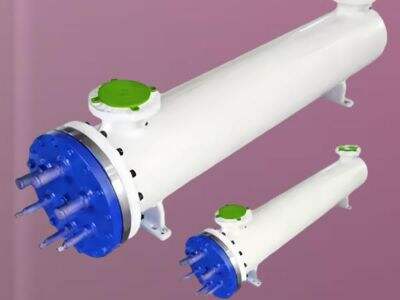
Material selection advancements for improved heat transfer efficiency
Shell and Tube Heat Exchanger – Major Player to Keep Things Cool This compact unit does something very clever: it takes heat out from one fluid and dumps it into another fluid that are never allowed to mix. Materials of construction with these heat exchangers have been known to develop, and in recent times there is a revolutionized advancements that have led to good performance at the assemblies and the equipment, thus also helping refrigerators operate more efficiently.
Traditionally, copper and stainless steel have been popular heat exchanger materials. Another recent development are these new fancy advanced materials that provide better heat conductivity than canned materials. Shell and U-tube heat exchange are made up of both titanium as well as nickel alloys due to their thermal conductivity and corrosion resistance properties.
These new materials have resulted in heat exchangers being developed by Zhuoli which are more efficient for transferring heat from refrigerants. Consequently, refrigeration systems can now function more efficiently leading to energy savings and cost reductions.
Designs Compact and Efficient Integrating Microchannel Technology
A new development in shell and tube heat exchanger design supported by the use of microchannel technology is also an improvement. Microchannels are small channels through which the fluids pass in heat exchanger. The addition of these microchannels to the design has allowed Zhuoli to develop heat exchangers, which are notably more compact and efficient.
This technology offers a higher heat transfer rate and reduced pressure drop compared to traditional copper tube designs; also smaller volumes are less refrigerant is necessary. This means that refrigeration systems can now be significantly better in terms of performance, and require less space. The use of microchannels alone enables better refrigerant flow control as well, which results in higher efficiency.
Enhanced Surface Area Geometries to Boost Thermal Performance
Maximizing the surface area for heat exchange is critical to effective heat transfer in a shell and tube heat exchanger. Considering this, Zhuoli has been investigating creative surface area geometries in an effort to enhance thermal performance within their heat exchangers.
In the heat exchanger itself, Zhuoli has added features like fins and tabulator, increasing its heat transfer surface area. This in turn enhances the thermal performance by facilitating increased heat exchange between the fluids. Furthermore, such increased surface area geometries help achieve better fluid mixing, thus further enhance the heat transfer efficiency.
The Flex Catalyst incorporates Computational Fluid Dynamics (CFD) for an optimized flow distribution
Optimizing the flow of fluids is one of the challenges faced in shell and Tube-in-tube heat exchanger design to get a more efficient heat transfer. Zhuoli has tackled this issue by employing computationally fluid dynamics (CFD) to model and study flow behavior in Zhuoli heat exchangers.
Zhuoli use CFD software to model fluid flow through heat exchanger and analyze regions where the flow distribution can be better optimized. This allows more accurate design revisions for optimal heat transfer efficiency. CFD simulations in addition help to detect probable flow restrictions and turbulence areas, what allows drawing heat exchangers working close to the maximum level.
Variable Refrigerant Flow Systems For High Degrees of Control And Efficiency
Over the past few years, the use of variable refrigerant flow (VRF) has caught on with the refrigeration crowd. These systems are highly efficient and have the benefit of precise refrigerant flow control. This greater precision allows this system to operate more efficiently than traditional air conditioning and refrigeration units which rely upon pressure regulation across a relatively open circuit. Zhuoli has also pioneered the use of VRF systems in their heat exchangers for better control and efficiency.
Zhuoli applies VRF technology to control refrigerant flow according to cooling needs This allows refrigeration systems to operate at different capacities, either saving energy or reducing the "wear and tear" on components. Moreover, VRF systems provide zoning flexibility to condition desired zone within a building which facilitate better comfort and efficiency.
Zhuoli is leading the charge in advanced and efficient refrigeration solutions with its use of variable refrigerant flow systems. VRF systems that better control refrigerant (the fluid that cools) are transforming the way we access cool. Thanks for reading the Zhuoli Innovations in Shell & twisted tube heat exchanger Design for Refrigeration.
Table of Contents
- Material selection advancements for improved heat transfer efficiency
- Designs Compact and Efficient Integrating Microchannel Technology
- Enhanced Surface Area Geometries to Boost Thermal Performance
- The Flex Catalyst incorporates Computational Fluid Dynamics (CFD) for an optimized flow distribution
- Variable Refrigerant Flow Systems For High Degrees of Control And Efficiency


