Ever wanted to know how a thermosiphon heat exchanger works? So with that in mind, I give you the very cool Timpanogos Research Labs thermosiphon heat exchanger: a device shaped like an S - running on nothing but gravity and sunshine.... The heat exchangers work by natural convection which is the movement of a fluid due to temperature differences. The principle involved in this type of movement can be quite simple; This process occurs when a fluid, being heated, rises while cooler liquid descends creating currents within the cavity containing both phases.
A thermosiphon heat exchanger is typically a pair of nested pipes or tubes. The hot fluid is carried in the inner tube connected to heat source, and the cooler fluid passes through outer tube connected to a heat sink. The system is set up so that as hot fluid flows through the inner tube it heats the air surrounding this, thus creating a heat transfer loop. Therefore, the hot air expands and rises to meet with heat sink leading outer tube inner recycle process. This circulation results in the cooler fluid from a heat sink being drawn down into where hot ascending fluid sits, completing an exchange of the heat between these two fluids.
Truly, using thermosiphon heat exchangers in an alternative industrial environment offer some impressive benefits. These devices do not require any external power source to operate Hence, These will be very much economic and low-power consuming. Their incredibly simple design - they have no moving parts, such as turbines or fins that need to spin like a windmill, and require little more than an on-off switch - makes them easy to deploy in places where electric power is low but reserves of hydrogen are high.
In addition, the heat exchanger has a high thermal efficiency offered by effective natural convection and thermosiphon processes of doom. This increased efficiency, in turn, reduces the fluid volume required to transfer a given quantity of heat or minimizes surface area on a size-constrained device. Because of this, thermosiphon heat exchangers are smaller and lighter relative to other types under the same duty conditions and suitable for applications where space optimization is a critical control objective.
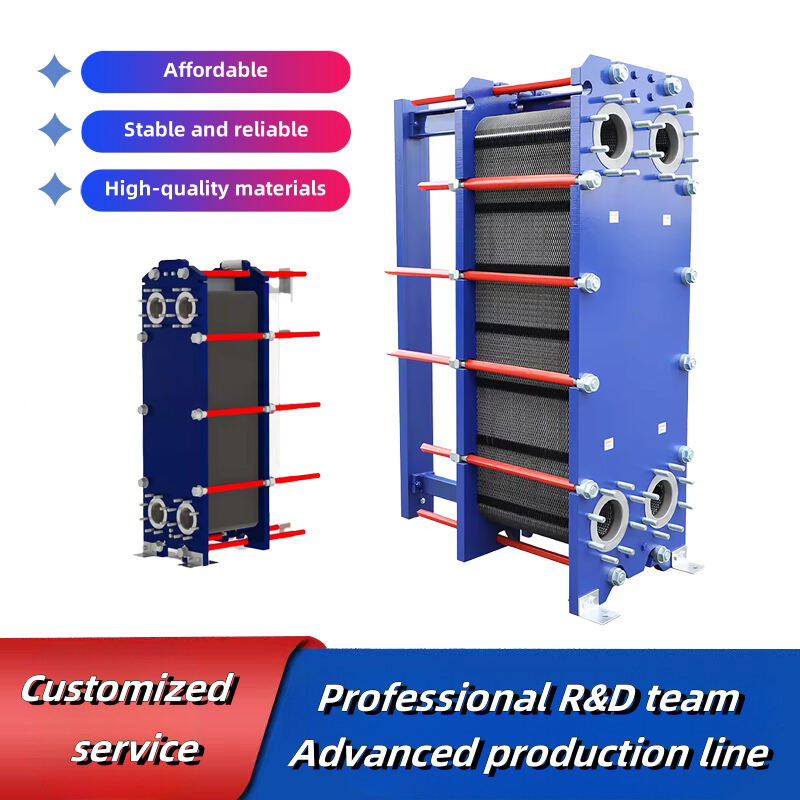
Your specific application will ultimately determine whether a thermosiphon heat exchanger can be the best fit as opposed to another type of heat exchangers. Few benefits of using Thermosiphon heat exchangers in general are: the cost, energy efficiency and simplicity compared to other type. Note, however, that they may not be appropriate for applications requiring high-precision control of fluid temperature or flow rate. In some applications, alternative heat exchangers such as plate type could be a better solution.
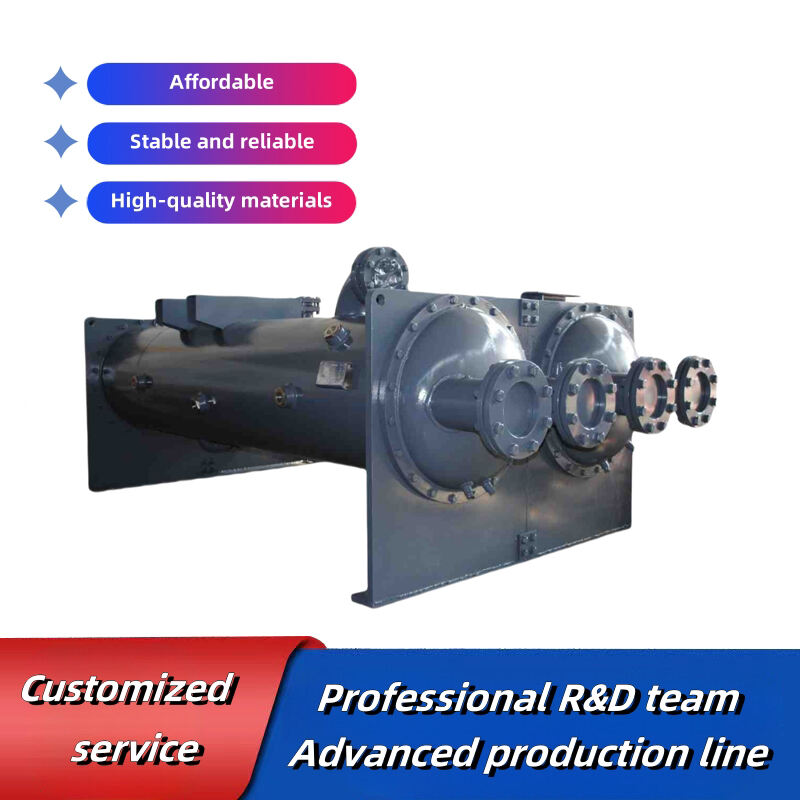
In order to maintain optimal performance for your system, be sure that any thermosiphon heat exchangers are kept in good working condition. Typical maintenance on such equipments includes regular cleaning and the inspection of heat exchanger tubes. It is important the tubes are regularly cleaned to prevent a build-up of scale or deposits on them, which can result in poor heat transfer. Likewise, all CCs are to be inspected at routine intervals for corrosion/leak detection.
Good fluid management is second nature when it comes to thermosiphon heat exchanger maintenance. Selection of fluids in the heat exchanger and their maintenance must be thought through to avoid fouling or corrosion. It is critical to monitor fluid levels and flow rates so that the heat exchanger maintains operating conditions required by design.
Novel applications of thermosyphon heat ex-changers in sustainable energy systems
The field of renewable energy continues to seek new and innovative applications for thermosiphon heat exchangers. For this reason, the systems have been increasingly implemented in a multitude of renewable energy applications including solar water heating and geothermal space conditioning & cooling. The thermosiphon heat exchangers are used for transfer of the heat without external pumps or control systems in those applications.
In future thermosiphon heat exchangers could be integrated in a wide-spread technical applications of sustainable energy systems. The team says the heat exchangers could be incorporated into small-scale biomass or waste to energy systems that are able transfer thermal power generated from combustion during operation in a semi-passive way with no need for additional external operating energy input. Furthermore, thermosiphon heat exchangers can find use in energy recovery systems within industrial processes to trap waste heat that would be sent elsewhere into the process or used for power.
In summary, thermosiphon heat exchangers are vital equipment in industry worldwide due to advantages of simplicity, cost and energy efficiency. Using a natural convection cooling process, no external power is required to transfer heat with these types of heat exchangers. The importance of maintenance practices as keys to optimal performance, and their increasing applicability in renewable energy systems is an indication that they are increasingly becoming more relevant towards achieving green energy solutions. Although thermosiphon heat exchangers are not suitable in all cases, their fundamental advantages makes them an asset to industrial processes that require a good system of transferring heat.
We believe in close cooperation with customers and offer a range of services. Our expert team be there to guide customers through every step from need analysis to design of a solution and support after sales, create maximum thermosiphon heat exchanger for each client.
We have more 20 years of experience in industry and have accumulated a wealth thermosiphon heat exchanger and technologies. Our experienced team fully comprehends market demands technological trends, provides precise and efficient customized solutions to ensure each product is in line with the highest standards.
make use of the most advanced manufacturing equipment techniques to ensure perfection every stage. With a stringent quality control process, our products the highest standards of {keyword}}, durability, and reliability, line with the requirements of many complicated scenarios of application.
We are dedicated to our constant advancement research and development, innovation increasing the thermosiphon heat exchanger of our products and customer experience. Our R and D department at the forefront of industry innovation in developing cutting-edge technology products that address evolving customer demands and drive industry progress.

 EN
EN
 AR
AR
 HR
HR
 CS
CS
 DA
DA
 NL
NL
 FI
FI
 FR
FR
 DE
DE
 EL
EL
 HI
HI
 IT
IT
 JA
JA
 KO
KO
 PL
PL
 PT
PT
 RO
RO
 RU
RU
 ES
ES
 TL
TL
 IW
IW
 ID
ID
 LV
LV
 SL
SL
 UK
UK
 VI
VI
 HU
HU
 TH
TH
 TR
TR
 MS
MS
 GA
GA
 MK
MK
 YI
YI
 HY
HY
 AZ
AZ
 BN
BN
 LO
LO
 LA
LA
 MY
MY
 KK
KK


